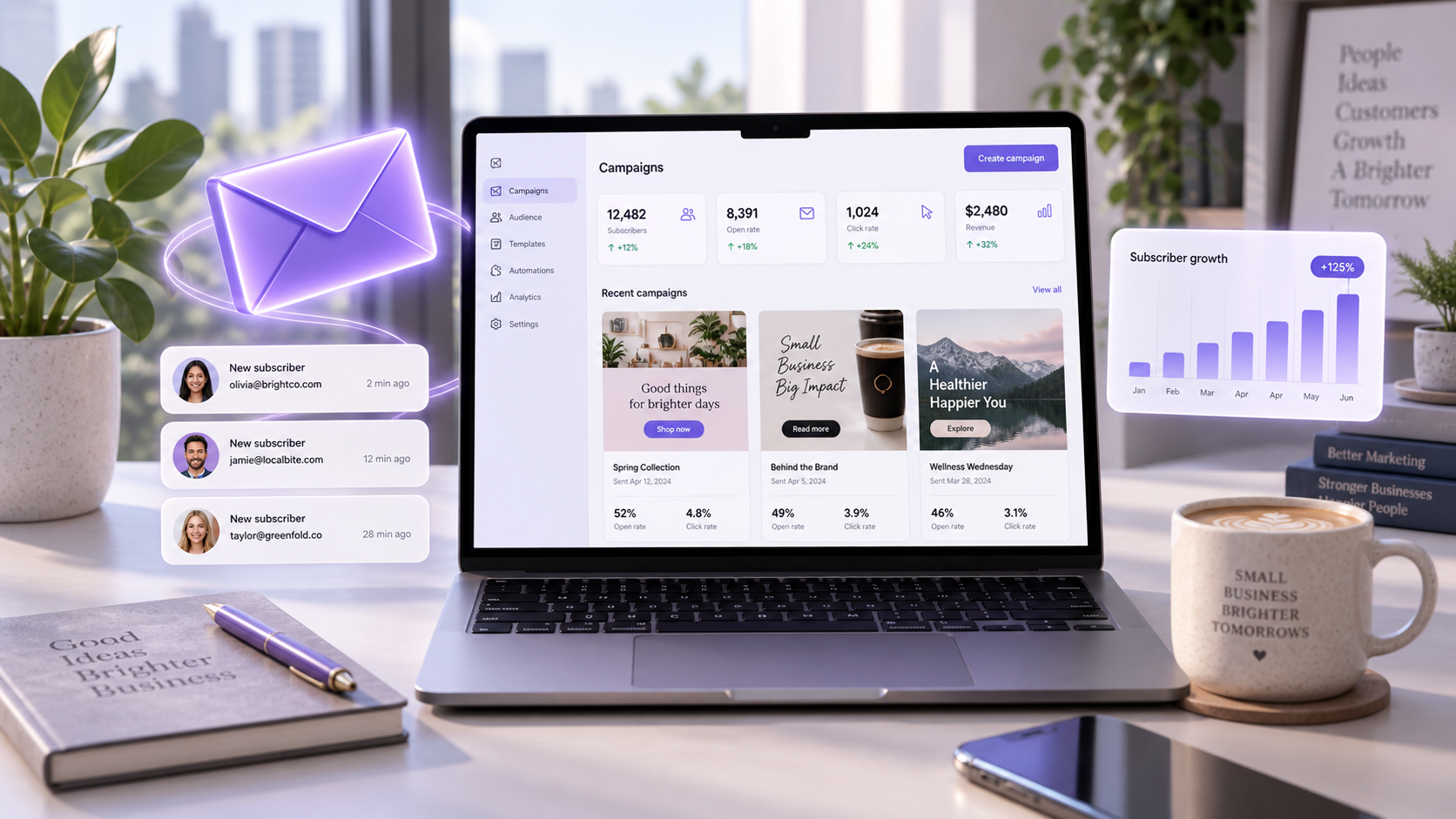
The best email marketing software for a small business should do more than send newsletters. It should help you collect subscribers, build automated campaigns, segment customers, measure results, and grow sales without requiring a full-time marketing team.
For most small businesses in 2026, MailerLite offers the best balance of price, usability, and automation. Brevo is ideal for businesses that send frequent campaigns to a large contact list, while Mailchimp remains a strong choice for beginners who need broad integrations. Ecommerce brands should consider Omnisend or Klaviyo, and B2B companies may benefit most from HubSpot or ActiveCampaign.
Pricing and free-plan limits change frequently. The figures below reflect information available in 2026 and should be checked against each provider’s current pricing page before purchase.
Best email marketing platforms
| Platform | Best for | Free plan | Entry-level paid pricing* | Standout feature |
|---|---|---|---|---|
| MailerLite | Overall small-business value | Yes | From about $9–$12/month | Simple automation and landing pages |
| Brevo | High-volume sending | Yes | From about $9/month | Pricing based largely on email volume |
| Mailchimp | Beginners and integrations | Limited | From about $13/month | Templates and broad integrations |
| Constant Contact | Local businesses and events | Trial | From about $12/month | Events, templates, and support |
| HubSpot | CRM-based marketing | Limited free tools | From about $20/month | Email connected to CRM data |
| ActiveCampaign | Advanced automation | Trial or limited entry options | Varies by contacts and features | Deep behavioral automation |
| Omnisend | Ecommerce | Yes | Varies by contacts and sends | Shopify and ecommerce workflows |
| Klaviyo | Data-driven ecommerce | Limited free tier | Varies by contacts and sends | Customer data and predictive segmentation |
| Kit | Creators and newsletters | Yes | From about $29–$33/month | Subscriber-focused automation |
| GetResponse | Funnels and webinars | Limited free plan | Varies by contacts | Email, landing pages, and webinars |
*Prices vary by billing cycle, contact count, email volume, region, taxes, and promotional offers.
What is email marketing software?
Email marketing software is a platform for managing permission-based email communication with customers and subscribers.
- Unlike a normal email application, it provides tools for:
- Subscriber forms.
- Contact lists.
- Segmentation.
- Newsletter design.
- Automated email sequences.
- A/B testing.
- Delivery reports.
- Unsubscribe management.
- Consent records.
- Ecommerce and CRM integrations.
An automated sequence is a set of emails sent when a subscriber meets specific conditions. For example, a new subscriber might receive a welcome email immediately, a product guide after two days, and a discount after one week.
- Small businesses use email marketing software for:
- Welcome campaigns.
- Product announcements.
- Abandoned-cart reminders.
- Appointment reminders.
- Customer education.
- Seasonal promotions.
- Lead nurturing.
- Repeat-purchase campaigns.
The best platform depends on how you sell. A local service company needs different features from an online store or a software startup.
1. MailerLite: Best overall
MailerLite is the best email marketing software for most small businesses in 2026. It combines a clean interface with newsletters, automation, forms, landing pages, websites, and basic ecommerce tools.
Its appeal is straightforward pricing and a gentle learning curve. A small team can create a campaign without hiring a specialist or spending days configuring the platform.
Key features
- Drag-and-drop email editor.
- Visual automation builder.
- Signup forms and popups.
- Landing pages.
- Basic website builder.
- Segmentation and groups.
- A/B testing.
- Campaign analytics.
- Digital product and subscription support on relevant plans.
MailerLite’s free plan is aimed at small lists, while paid plans increase subscriber limits and unlock additional capabilities. Industry comparisons list free usage around 1,000 subscribers, although exact limits vary by current plan and account type (hostinger.com).
Best for
- Local service businesses.
- Consultants.
- Agencies.
- Bloggers.
- Nonprofits.
- Small online stores.
- Businesses starting their first newsletter.
Limitations
MailerLite is not a full customer relationship management system, or CRM. Its ecommerce and sales features are also less extensive than those in HubSpot, Klaviyo, or ActiveCampaign.
Verdict: Choose MailerLite if you want an affordable, easy-to-manage email platform with useful automation.
2. Brevo: Best for high-volume campaigns
Brevo is a strong choice for businesses with many contacts that do not email every subscriber frequently. Its pricing is based mainly on the number of emails sent rather than only the size of the contact database.
That model can be cheaper for businesses with a large dormant list. For example, a company with 20,000 contacts but only one monthly campaign may pay less than it would on a subscriber-count-based platform.
Key features
- Email campaigns.
- Marketing automation.
- Transactional email.
- SMS and WhatsApp campaigns.
- Contact segmentation.
- Signup forms.
- Landing pages.
- Shared inbox tools.
- Basic CRM functions.
- SMTP and API access.
Transactional email is automated system email, such as password resets, invoices, order confirmations, and account notifications. Brevo is unusual among beginner-friendly marketing platforms because it combines promotional and transactional sending.
The free plan has a daily sending limit. Comparisons in 2026 list the free tier at up to 300 emails per day, while paid plans begin at roughly $9 per month depending on sending volume (hostinger.com).
Best for
- Large contact lists.
- Online stores.
- Appointment-based businesses.
- Businesses sending both marketing and transactional emails.
- Companies needing SMS alongside email.
Limitations
The daily limit on the free plan can be restrictive during a major promotion. The visual email editor and automation tools are capable, but some competitors offer a smoother experience.
Verdict: Choose Brevo when sending volume matters more than the number of stored contacts.
3. Mailchimp: Best for beginners and integrations
Mailchimp remains one of the most recognizable email marketing platforms. It offers an accessible campaign builder, numerous templates, audience tools, analytics, and a large integration ecosystem.
It is a practical option when your business already uses tools that connect to Mailchimp. Integrations can link email campaigns with ecommerce platforms, forms, event systems, CRM software, and analytics tools.
Key features
- Email templates.
- Drag-and-drop campaign builder.
- Signup forms.
- Basic automations.
- Segmentation.
- A/B testing.
- Landing pages.
- Social posting tools.
- Ecommerce integrations.
- Email and SMS features.
Mailchimp’s current free offering is limited. Its official product pages show a free option with a 250-contact limit, while entry paid pricing is around $13 per month and varies with contacts and features (mailchimp.com).
Best for
- New email marketers.
- Small businesses wanting templates.
- Businesses needing many third-party integrations.
- Teams already using the Intuit ecosystem.
Limitations
Mailchimp becomes expensive as your audience grows. Its pricing can also depend on contacts, sending limits, and feature tiers. Review whether unsubscribed or inactive contacts count toward billing.
Verdict: Mailchimp is easy to start with, but compare future costs before building a large audience there.
4. Constant Contact: Best for local businesses
Constant Contact focuses on ease of use, templates, events, and small-business communication. It is particularly suitable for local businesses, nonprofits, community organizations, and companies that run workshops or events.
Key features
- Newsletter templates.
- Contact management.
- Event registration.
- Surveys and polls.
- Social media tools.
- List segmentation.
- Automation.
- Ecommerce integrations.
- Phone and chat support on selected plans.
The platform offers a free trial rather than a permanent free plan. Entry-level pricing is listed at approximately $12 per month, depending on the current plan and subscriber count (constantcontact.com).
Best for
- Restaurants.
- Fitness studios.
- Schools and associations.
- Nonprofits.
- Local retailers.
- Event organizers.
- Businesses that prefer guided support.
Limitations
Constant Contact is not usually the cheapest option for a large list. Its automation depth also trails ActiveCampaign and HubSpot.
Verdict: Choose it when simplicity, templates, events, and support are more important than advanced automation.
5. HubSpot: Best for CRM-powered email
HubSpot is more than an email marketing platform. Its Marketing Hub connects email campaigns to a CRM, sales pipeline, forms, live chat, analytics, and customer records.
A CRM, or customer relationship management system, stores information about leads and customers. That lets you create campaigns based on sales activity rather than only email engagement.
- For example, you could email:
- Leads that requested a quotation.
- Customers who have not purchased in six months.
- Contacts assigned to a specific sales representative.
- Users who opened a proposal but did not respond.
Key features
- CRM contact records.
- Email campaigns.
- Marketing automation.
- Lead scoring.
- Forms and landing pages.
- Deal and pipeline tracking.
- Sales and service integration.
- Reporting dashboards.
- Customer journey segmentation.
HubSpot offers free CRM tools, but advanced marketing automation, larger sending volumes, and broader reporting may require paid tiers. Pricing can also increase with marketing contacts and additional features (hubspot.com).
Best for
- B2B service companies.
- Agencies.
- Consultancies.
- Sales-led businesses.
- Teams that need marketing and sales in one system.
Limitations
HubSpot can become expensive as your contact database and automation requirements grow. It may be excessive if you only need a monthly newsletter.
Verdict: Use HubSpot when email marketing must connect closely to sales operations.
6. ActiveCampaign: Best for advanced automation
ActiveCampaign is built for behavioral automation. It can trigger campaigns based on page visits, link clicks, purchases, lead scores, form submissions, and CRM events.
Its automation builder supports branching logic. A customer who clicks a product link can receive one follow-up, while a subscriber who ignores the email receives another.
Key features
- Visual automation maps.
- Email sequences.
- Contact tagging.
- Lead scoring.
- CRM and sales pipelines.
- Ecommerce workflows.
- Conditional content.
- Website tracking.
- SMS integrations.
- Reporting and attribution.
ActiveCampaign lists email marketing, limited segmentation, automation actions, CRM, and ecommerce integrations across its plans, with pricing determined by features and contact count (activecampaign.com).
Best for
- B2B lead nurturing.
- Agencies.
- Sales teams.
- Online courses.
- Businesses with complex customer journeys.
- Companies that need behavior-based campaigns.
Limitations
The platform requires more setup than MailerLite or Mailchimp. Its pricing also rises as contacts increase.
Verdict: Choose ActiveCampaign when automation complexity directly supports revenue.
7. Omnisend: Best for ecommerce
Omnisend is designed for ecommerce businesses. It connects email, SMS, push notifications, products, discounts, and customer behavior in one marketing workflow.
Key features
- Abandoned-cart emails.
- Browse-abandonment campaigns.
- Product recommendations.
- Post-purchase automation.
- Customer segmentation.
- Discount codes.
- SMS and push notifications.
- Shopify and ecommerce integrations.
- Revenue reporting.
An ecommerce platform can send a browse-abandonment email when someone views a product but does not purchase. That workflow is more useful for a store than a generic newsletter sequence.
Best for
- Shopify stores.
- WooCommerce stores.
- Direct-to-consumer brands.
- Subscription products.
- Retail businesses.
- Stores using email and SMS together.
Limitations
Omnisend’s pricing depends on contacts and message volume. Costs can rise quickly when both email and SMS are used heavily.
Verdict: Choose Omnisend if your primary goal is ecommerce revenue rather than general newsletters.
8. Klaviyo: Best for advanced ecommerce data
Klaviyo is a powerful customer-data and marketing platform for ecommerce brands. It uses purchase history, browsing activity, product data, and customer behavior to create highly targeted campaigns.
Key features
- Ecommerce segmentation.
- Product catalogs.
- Predictive analytics.
- Abandoned-cart workflows.
- Customer lifetime value analysis.
- Email and SMS.
- Dynamic product recommendations.
- Purchase-based automation.
- Detailed revenue attribution.
Customer lifetime value, or CLV, estimates how much revenue a customer may generate throughout the relationship with a business.
Best for
- Growing ecommerce brands.
- Fashion and retail businesses.
- Stores with substantial customer data.
- Businesses that need revenue-based reporting.
- Brands using advanced segmentation.
Limitations
Klaviyo can be more expensive and complex than Omnisend. It is usually not the right first platform for a local service company or a simple blog.
Verdict: Choose Klaviyo when ecommerce data and advanced segmentation justify the cost.
9. Kit: Best for creators
Kit, formerly known as ConvertKit, focuses on creators, publishers, educators, bloggers, and newsletter operators.
Its model revolves around subscribers rather than traditional mailing lists. You can tag subscribers according to interests and trigger sequences based on their behavior.
Key features
- Creator-focused email editor.
- Subscriber tags.
- Visual automations.
- Landing pages.
- Signup forms.
- Digital product sales.
- Paid newsletter support.
- Broadcast emails.
- Automated sequences.
Industry comparisons list Kit’s free plan at up to 10,000 subscribers, with paid pricing commonly beginning around $29–$33 per month depending on billing and current plan terms (hostinger.com).
Best for
- Coaches.
- Authors.
- Bloggers.
- Newsletter publishers.
- Course creators.
- Podcasters.
- Personal brands.
Limitations
Kit is less suitable for complex ecommerce catalogs or traditional sales teams. Its pricing can also be high for a small business that only needs occasional newsletters.
Verdict: Choose Kit if your business is built around content, subscribers, and digital products.
10. GetResponse: Best for funnels and webinars
GetResponse combines email marketing with landing pages, conversion funnels, webinars, and automation.
This makes it useful for businesses that want to capture leads, educate them, and sell through a structured funnel.
Key features
- Email newsletters.
- Autoresponders.
- Landing pages.
- Conversion funnels.
- Webinars.
- Website builder.
- Segmentation.
- Lead scoring.
- Ecommerce automation.
- Paid advertising integrations.
A sales funnel is the sequence a prospect follows from discovering a business to becoming a customer. GetResponse lets you manage several stages of that process from one platform.
Best for
- Online educators.
- Coaches.
- Course sellers.
- Webinar businesses.
- Affiliate marketers.
- Small companies building lead funnels.
Limitations
Some advanced automation, webinar capacity, and conversion features are restricted to higher plans. The interface may also feel less focused than a dedicated newsletter platform.
Verdict: Choose GetResponse when email is part of a broader lead-generation funnel.
Which platform should you choose?
- Choose MailerLite if you want the best general-purpose option for a small business.
- Choose Brevo if you have many contacts but send relatively few campaigns per month.
- Choose Mailchimp if integrations and templates matter more than long-term pricing.
- Choose Constant Contact if you run a local business, nonprofit, or event program.
- Choose HubSpot if marketing must connect with sales and CRM records.
- Choose ActiveCampaign if you need complex behavioral automation.
- Choose Omnisend or Klaviyo for ecommerce.
- Choose Kit if you are a creator, publisher, or educator.
- Choose GetResponse if you need webinars and conversion funnels.
How to select email marketing software
Before subscribing, answer these questions:
How large is your list?
Some platforms charge by stored contacts. Others charge by email volume. A contact-based plan can be cheaper for frequent campaigns to a small list, while a volume-based plan can be better for a large but inactive database.
Do you need a CRM?
If you only send newsletters, use MailerLite or Mailchimp. If you manage leads, sales stages, and customer records, consider HubSpot or ActiveCampaign.
Do you sell online?
- Ecommerce brands should prioritize:
- Product data synchronization.
- Abandoned-cart automation.
- Purchase segmentation.
- Discount-code support.
- Revenue attribution.
- SMS integration.
How complex is your automation?
A welcome email needs basic automation. A multi-step B2B nurture campaign may need conditional branches, lead scoring, and sales integration.
Will you need support?
A low-cost platform may be enough for a technical founder. A local-business owner may value phone support, onboarding, templates, and guided setup more than advanced API features.
Email deliverability essentials
Deliverability is the ability of your emails to reach the recipient’s inbox rather than the spam folder.
- Your platform helps, but your practices matter just as much:
- Authenticate your domain with SPF, DKIM, and DMARC.
- Use a recognizable sender name.
- Obtain permission before sending.
- Remove inactive and invalid addresses.
- Avoid purchased email lists.
- Provide a visible unsubscribe link.
- Monitor bounces and spam complaints.
- Send consistently.
- Warm up a new domain gradually.
SPF, DKIM, and DMARC are email-authentication standards. They help receiving mail servers verify that your business is authorized to send messages from your domain.
Do not judge a platform only by its template library. A beautiful email that never reaches the inbox produces no revenue.
Final verdict
MailerLite is the best email marketing software for most small businesses in 2026 because it offers a strong combination of ease of use, automation, forms, landing pages, and reasonable pricing.
Brevo is the best alternative for high-volume or transactional email. Mailchimp is still convenient for beginners, but its contact-based pricing deserves close attention. HubSpot and ActiveCampaign are better for sales-driven teams, while Omnisend and Klaviyo lead for ecommerce.
The right platform is the one that matches your list size, sending frequency, sales process, and automation needs. Start with a platform that can handle your next 12 months of growth, not merely the size of your list today.